There is something oddly satisfying about asking a tiny question like, “What time was it 38 minutes ago from now?” It sounds almost too small to deserve a calculation, yet when you’re trying to remember when a message arrived.
When a meeting started, or when something happened on your phone, those 38 minutes suddenly matter quite a lot. Time has this sneaky habit of moving quietly while we are busy doing other things.
Using the reference time 9:14:46 AM on Tuesday, October 6, 2026, we can simply subtract 38 minutes. The answer is 8:36:46 AM on the same day. So, October 6, 2026, 8:36:46 AM was the exact datetime 38 minutes ago from the stated reference point.
It really is a straightforward time calculation, but understanding how it works makes similar questions much easier. Whether you need a minutes ago calculator, a relative time calculator, or just want to do the arithmetic yourself, the method stays pleasantly simple.
| Type | Short Point |
|---|---|
| Primary Keyword | 38 Minutes Ago From Now |
| Main Intent | Time Calculation |
| Main Entity | Relative Time |
| Calculation | Current Time − 38 Minutes |
| LSI Keyword | 38 Minutes Before Now |
| LSI Keyword | What Time Was It 38 Minutes Ago |
| Related Keyword | Minutes Ago Calculator |
| Related Keyword | Time Calculator |
| Semantic Topic | Past Time Calculation |
What Is 38 Minutes Ago From Now?
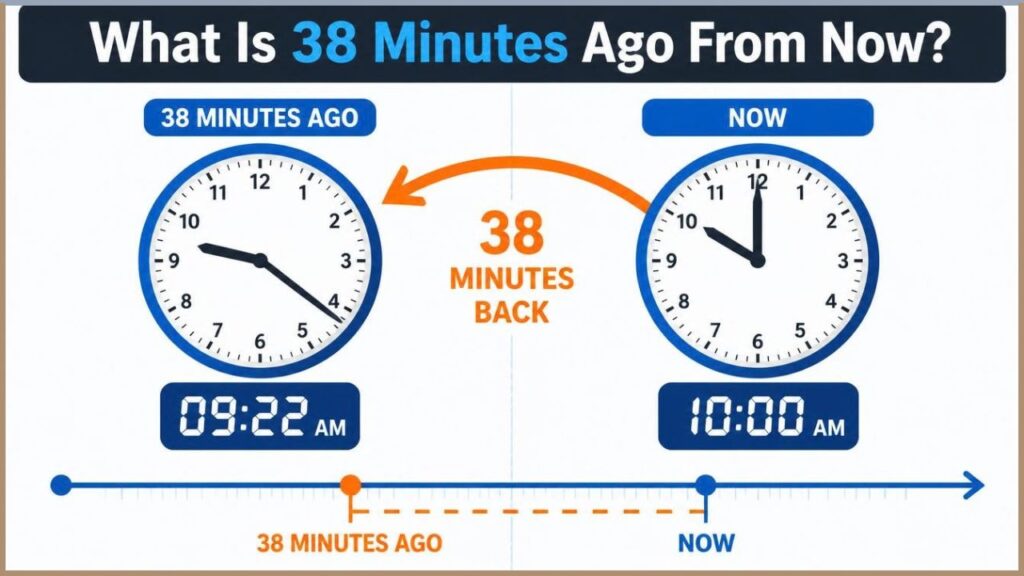
When someone asks what time was it 38 minutes ago, they are asking for a past clock time based on a known present or reference time. In other words, take the current time, move backward by 38 minutes, and the resulting clock reading is the answer.
For this example, the starting point is 9:14:46 AM, and the requested interval is 38 minutes. Because 38 minutes is less than the 14 minutes currently shown after 9:00, we cross the hour boundary and arrive at 8:36:46 AM. It looks a little dramatic on paper, but the arithmetic is rather ordinary.
The calculation can be written like this:
9:14:46 AM − 38 minutes = 8:36:46 AM
Therefore, 38 minutes before now, using the supplied reference datetime, was 8:36:46 AM on Tuesday, October 6, 2026. Nothing else about the date changes because the subtraction does not cross midnight, which is handy here.
The Exact Answer: 38 Minutes Earlier

Let’s put the result in a form that’s easy to remember, because sometimes a calculation is useful only when the answer is sitting right in front of you.
- Reference time: 9:14:46 AM
- Time interval: 38 minutes
- Operation: subtract 38 minutes
- Result: 8:36:46 AM
- Reference date: Tuesday, October 6, 2026
- Result date: Tuesday, October 6, 2026
- Full result: October 6, 2026, 8:36:46 AM
So if your actual question is “what was the time 38 minutes ago?”, the answer for this reference point is 8:36:46 AM.
A small detail worth noticing is the seconds. Subtracting whole minutes does not change the seconds, so the “46” remains attached to the time. This is one of those little details people sometimes forget when doing a quick relative time calculation in their head.
How to Calculate 38 Minutes Ago From Now
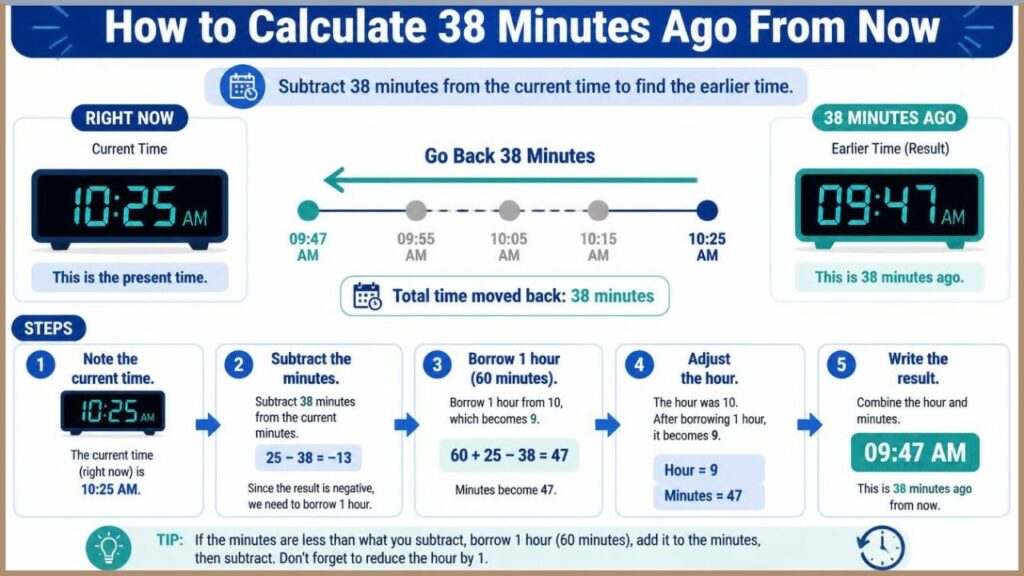
You don’t need a special time ago calculator to perform this calculation. A clock, a piece of paper, or frankly a mildly awake brain will do the job.
Start with the hour and minute. Here, we have 9:14 AM. Then subtract 38 minutes from 14 minutes. Since 14 is smaller than 38, borrow one hour, turning 9:14 into 8:74 for calculation purposes.
Now subtract: 74 − 38 = 36
The hour is therefore 8, giving us 8:36 AM. The seconds remain 46, producing 8:36:46 AM.
This same technique works for almost any question involving current time minus 38 minutes. If the subtraction stays within the same hour, it is even easier. If it crosses midnight, however, the calendar date needs to change too, and thats where paying attention becomes important.
Why Seconds Matter in a Time Calculation
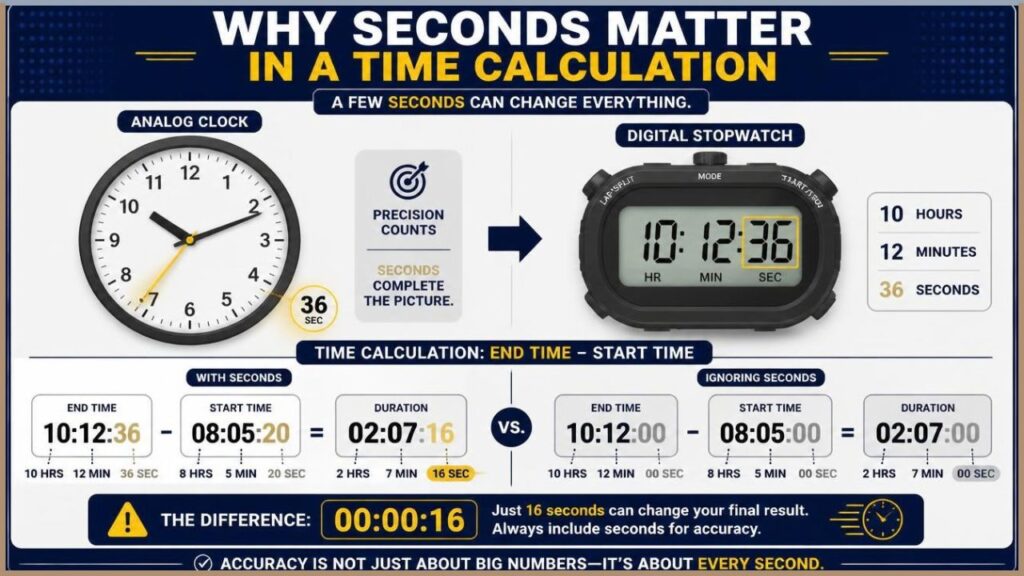
Most everyday questions about “38 minutes ago” don’t care about seconds. If somebody asks when you sent an email and you say “around 8:36,” nobody is usually standing there with a stopwatch looking disappointed.
But a precise timestamp can matter when you are comparing records, checking system activity, examining a transaction, or matching two events. In those situations, 8:36:46 AM is different from 8:36:00 AM, even though both belong to the same minute.
The supplied reference datetime is October 6, 2026, 9:14:46 AM, so preserving the seconds gives a more exact result. Subtracting 38 whole minutes changes the minutes and potentially the hour, but leaves the seconds untouched.
That is the slightly nerdy beauty of a precise datetime calculation: every little part has a job.
What Time Was It 38 Minutes Before Now?
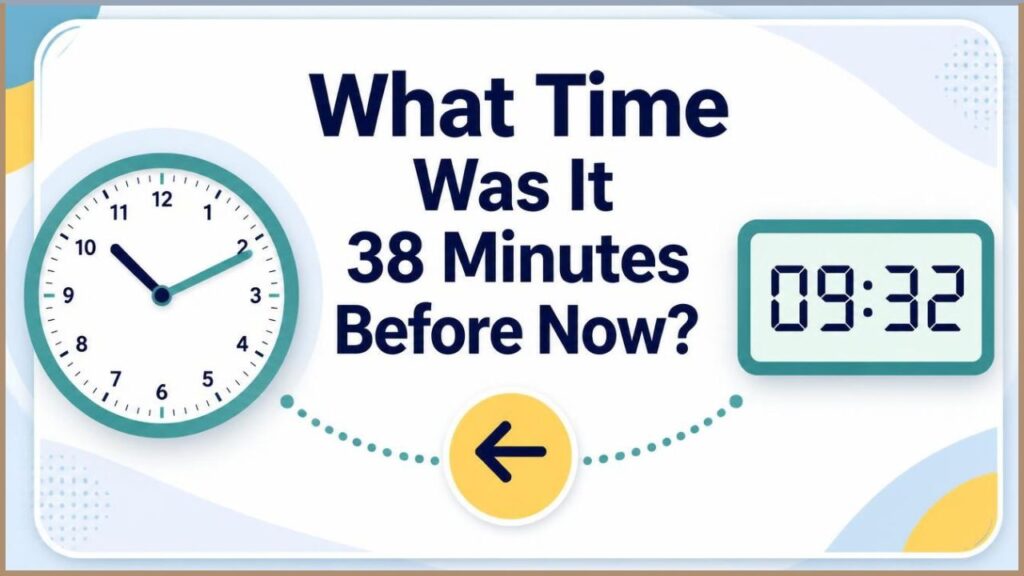
The phrase 38 minutes before now means exactly the same thing as 38 minutes ago, provided “now” refers to the same reference moment.
For the stated example:
9:14:46 AM → subtract 38 minutes → 8:36:46 AM
So, if someone searched “38 minutes ago time calculator”, this is the basic operation the calculator would perform. It takes a starting clock time, applies a negative time interval, and returns the previous time.
You might see the same idea described as calculate 38 minutes ago from now, time 38 minutes earlier, or subtract minutes from current time. The wording changes, but the temporal relationship does not. It is simply a past-time calculation.
38 Minutes Ago and the Wider Relative-Time Calculator
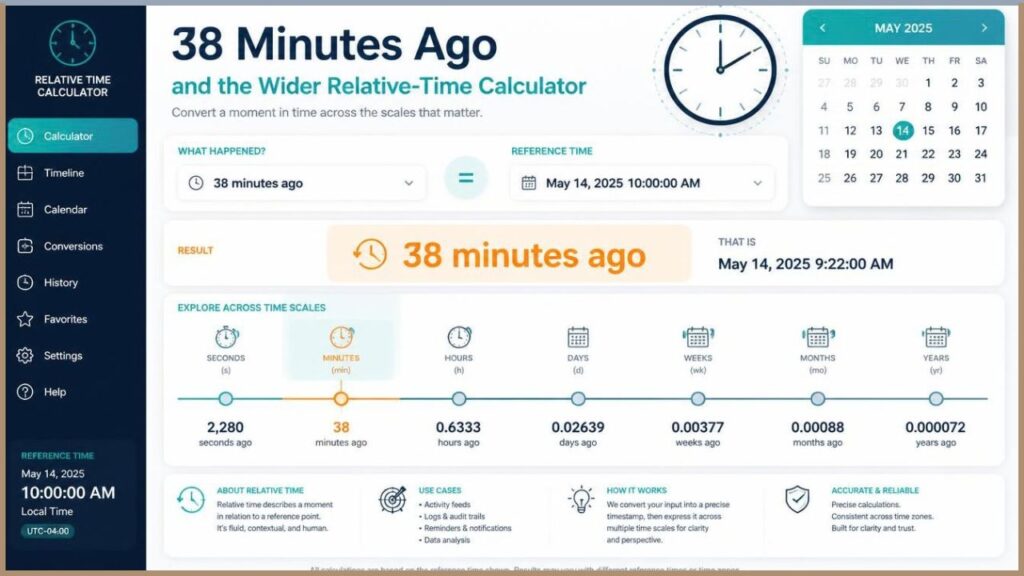
A useful thing about understanding one small calculation is that it opens the door to a whole family of calculations. A relative time calculator can work backward or forward from a reference point using different units.
For example, someone may ask for:
- Minutes ago from now to find a recent past clock time.
- Hours ago from now to locate an earlier time today.
- Days ago from today to find a previous calendar date.
- Weeks ago from today to move backward by complete weeks.
- Months ago from today to locate an earlier month.
- Years ago from today to identify the corresponding date in a previous year.
The reverse direction works too. You can calculate minutes from now, hours from now, days from today, weeks from today, months from today, or years from today.
This is why a tiny question such as 38 minutes ago belongs to the larger topic of relative date and time calculation. It is one small window into a much bigger calendar-and-clock system.
Understanding Minutes From Now

Past calculations aren’t the only reason people use a time calculator. Sometimes the question points forward instead.
If the reference time is 9:14:46 AM and you add 38 minutes, you get 9:52:46 AM. The operation is almost the mirror image of the previous one.
9:14:46 AM + 38 minutes = 9:52:46 AM
This is the basic idea behind a minutes from now calculator. Instead of asking where you were 38 minutes earlier, you’re asking where the clock will be 38 minutes later.
It can be useful for alarms, cooking timers, appointment planning, travel preparation, study sessions, and those moments when someone says, “I’ll be there in half an hour,” and you quietly want to know what that actually means.
Hours, Days, Weeks, Months, and Years From a Reference Time
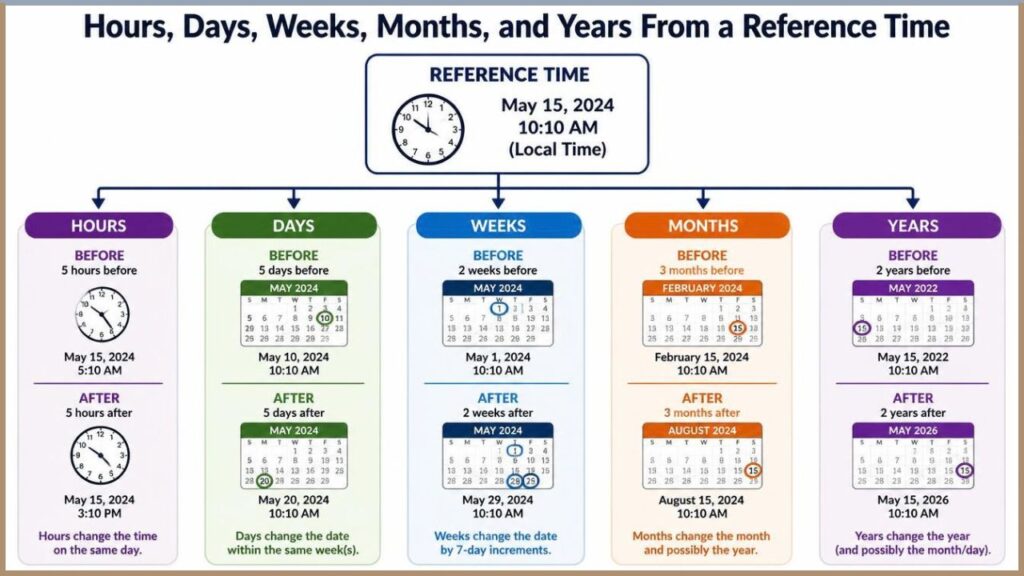
Relative time becomes more interesting when the unit gets larger. Hours from now can still be a clock-time question, while days from today usually becomes a calendar-date question.
For instance, adding several days requires attention to the calendar, while adding months can become slightly trickier because different months contain different numbers of days. February, naturally, likes making things complicated just when everyone thought the calendar was behaving.
The same broader structure includes:
- Hours ago from now for earlier clock times.
- Days ago from today for previous calendar dates.
- Weeks ago from today for dates separated by seven-day intervals.
- Months ago from today for earlier monthly dates.
- Years ago from today for annual comparisons.
- Hours from now for upcoming times.
- Days from today for future dates.
- Weeks from today for longer planning.
- Months from today for medium-term dates.
- Years from today for long-range planning.
The important idea is that all these calculations begin with a reference point. Without a reliable starting date and time, even the best formula has nothing solid to work with.
Why the Reference Date Matters
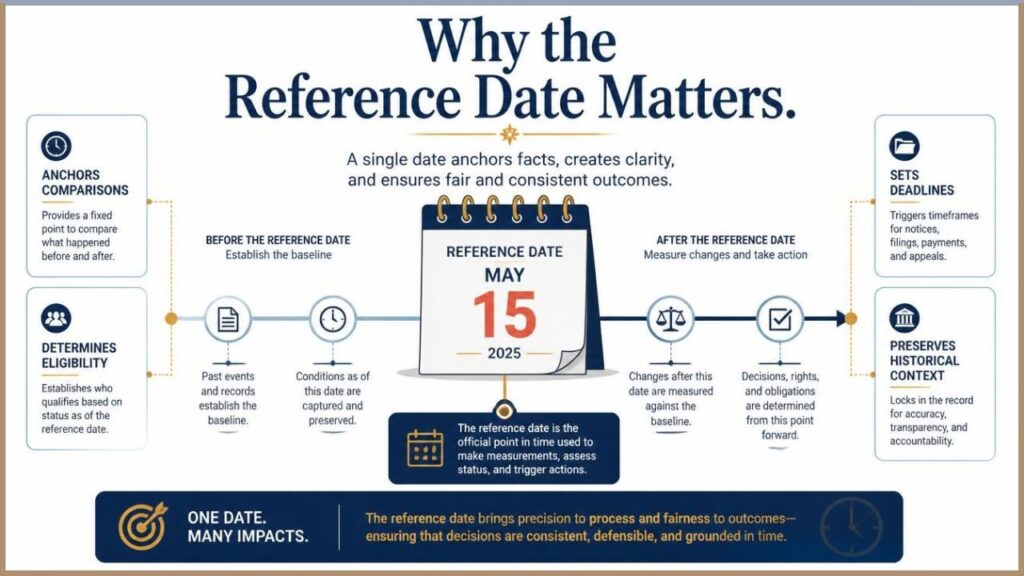
A question such as “what time was it 38 minutes ago from now” seems to need only a clock. In reality, a full answer may need both the clock and the calendar date.
Here, the reference is Tuesday, October 6, 2026, at 9:14:46 AM. Subtracting 38 minutes does not push the time into the previous day, so the answer remains Tuesday, October 6.
But imagine starting at 12:15 AM and subtracting 38 minutes. The resulting time would be 11:37 PM on the previous calendar day. Suddenly, the date matters just as much as the clock.
That is why reliable date and time calculations treat a timestamp as more than just a number displayed on a screen. The date, hour, minute, second, and sometimes even the time zone can all affect the final result.
A Quick Way to Check Your Answer
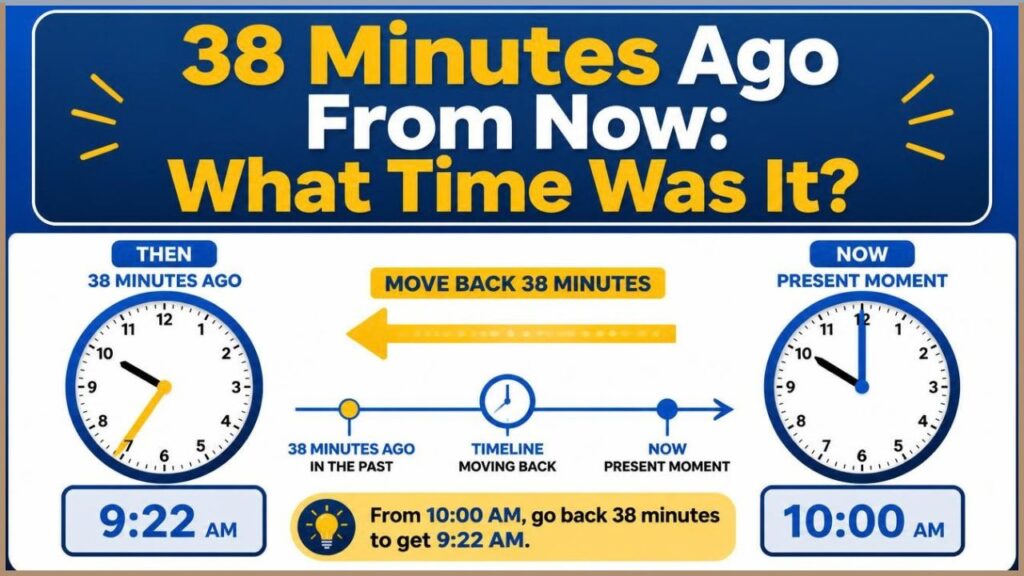
There is a lovely little trick for checking a past-time calculation: simply reverse the operation.
We calculated:
9:14:46 AM − 38 minutes = 8:36:46 AM
Now add 38 minutes back:
8:36:46 AM + 38 minutes = 9:14:46 AM
It returns to the starting point, so the calculation checks out.
This reverse-check method is particularly useful when you are doing mental arithmetic. It catches silly mistakes without requiring another complicated method, and those are usually the mistakes that sneak in when you’re doing time calculations too quickly.
Common Mistakes When Calculating Time Ago
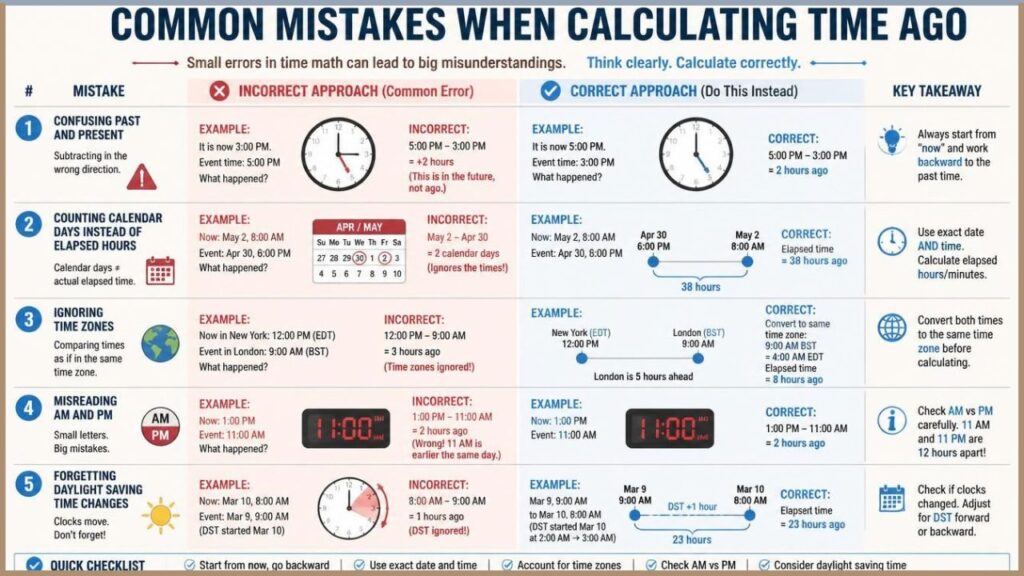
The most common mistake is forgetting to cross the hour boundary. Someone sees 9:14 AM and subtracts 38 from 14 without borrowing the hour, producing a nonsense negative minute value. The clock is not broken, of course; the arithmetic just needs one extra step.
Another common issue is changing the seconds unnecessarily. If the reference time is 9:14:46 AM and you’re subtracting exactly 38 minutes, the seconds stay at 46. They don’t magically become zero because the minutes changed.
People also sometimes confuse 38 minutes ago with 38 minutes from now. One points backward into the past; the other moves forward into the future. Tiny words, rather large difference, honestly.
Finally, don’t forget the date when a calculation crosses midnight. A correct clock time paired with the wrong calendar date is still an incorrect datetime.
When a 38-Minute Calculation Is Actually Useful

This sort of calculation has more practical value than it first appears. You might be trying to remember when a phone notification appeared, when a friend called, when an online status changed, or when you started a task.
Suppose a message arrived at the reference time of 9:14:46 AM and someone asks, “When did you start waiting?” If the answer was 38 minutes earlier, you now know that the relevant time was 8:36:46 AM.
The same principle can help with appointment records, work logs, cooking schedules, exercise sessions, transportation timing, and digital timestamps. It is a tiny calculation, but tiny calculations often sit underneath surprisingly ordinary decisions.
How a Relative Time Calculator Handles the Same Question
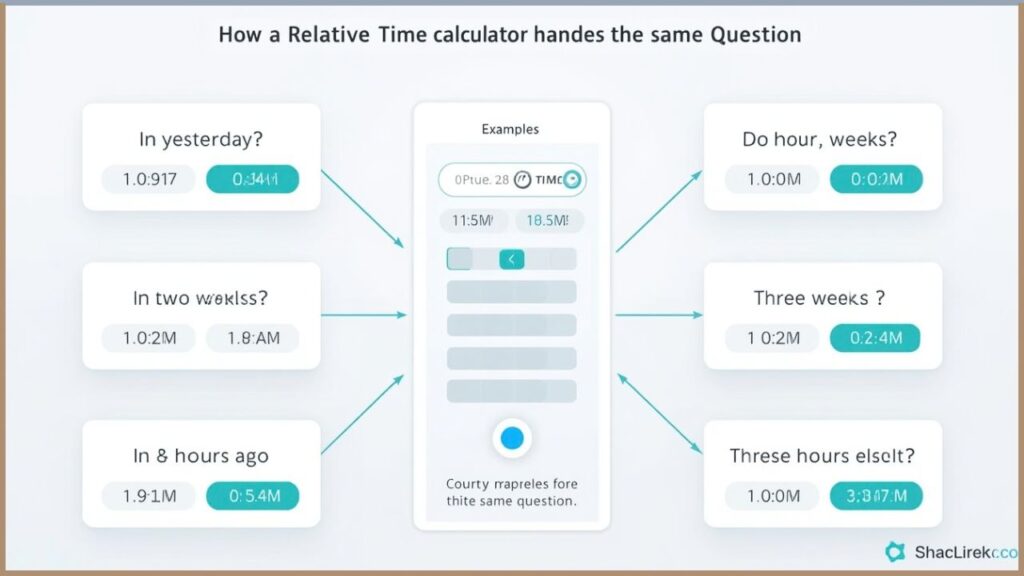
A relative time calculator normally follows three basic ingredients: a starting datetime, a direction, and an interval.
For this example, the starting datetime is October 6, 2026, 9:14:46 AM. The direction is backward because the phrase “ago” indicates the past. The interval is 38 minutes.
The calculation engine then performs:
Reference datetime − 38 minutes = result datetime
The result is October 6, 2026, 8:36:46 AM.
Whether you perform this manually or use a datetime calculator, the mathematical relationship should be identical when the same reference point and time zone are used. Thats the key thing: calculators don’t create time, they simply make the arithmetic less annoying.
A Simple Mental Method for 38 Minutes Ago
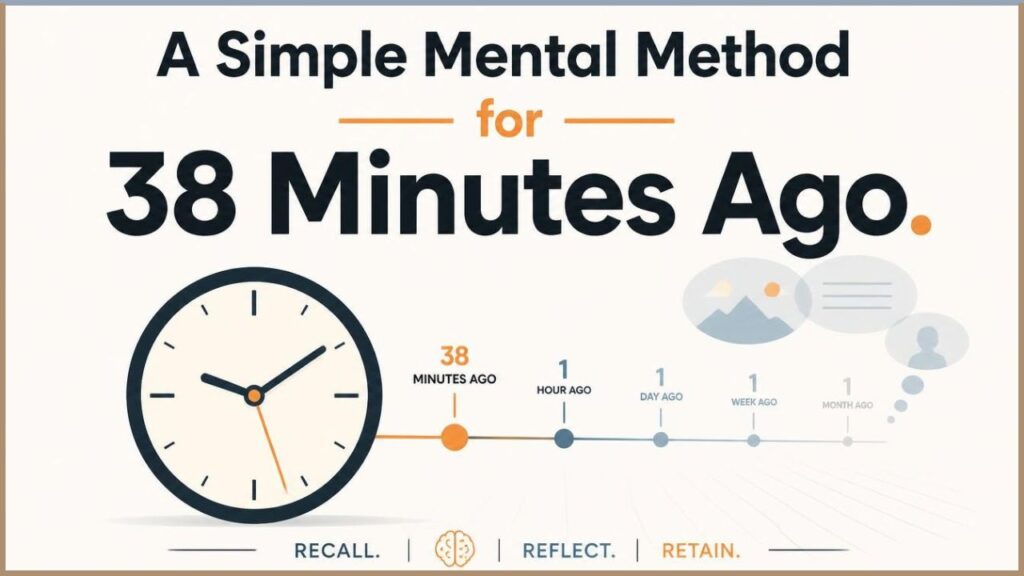
If you don’t have a calculator nearby, try thinking in chunks. From 9:14 AM, go backward 14 minutes to reach 9:00 AM. You still need to subtract 24 more minutes.
Now move backward those 24 minutes from 9:00 AM, landing at 8:36 AM. Keep the original 46 seconds, and you’ve got 8:36:46 AM.
This approach is often easier than trying to subtract 38 directly. Breaking a time interval into smaller pieces makes the mental calculation feel less slippery, particularly when you’re tired or rushing somewhere.
And yes, it is perfectly fine if you count on your fingers. Time does not award bonus points for elegance.
The Broader Meaning of “Ago From Now”

The phrase ago from now describes a relationship between the present reference point and something that happened earlier. It is inherently backward-looking.
“38 minutes ago” means 38 minutes before the reference moment. “Three hours ago” means three hours before it. “Two days ago” shifts the same concept from clock arithmetic into calendar arithmetic.
The opposite expression, “from now,” usually points toward the future. Thus, minutes from now and hours from now describe upcoming moments, while minutes ago from now and hours ago from now describe previous moments.
Once this distinction becomes familiar, many relative-date questions stop feeling like separate puzzles. They are really variations of one simple idea: move along the timeline from a point.
Final Answer: What Time Was It 38 Minutes Ago?

For the exact reference supplied in this article, the answer is clear:
Reference: October 6, 2026, 9:14:46 AM
Interval: 38 minutes
Direction: Backward
Result: October 6, 2026, 8:36:46 AM
So, 38 minutes ago from now was 8:36:46 AM on Tuesday, October 6, 2026.
If you remember only one formula, let it be this:
Current/reference time − elapsed minutes = past time
For this particular example:
9:14:46 AM − 38 minutes = 8:36:46 AM
That same little pattern can be expanded into a full time difference calculator, date calculator, or relative date calculator approach for larger intervals. Whether you’re working with minutes, hours, days, weeks, months, or years, the heart of the calculation remains wonderfully uncomplicated: choose an accurate starting point, identify whether you’re moving backward or forward, and apply the interval carefully.
Time itself doesn’t pause to explain where it went. Fortunately, arithmetic can sometimes retrace its footsteps for us. And in this case, those footsteps lead neatly from 9:14:46 AM back to 8:36:46 AM, exactly 38 minutes earlier.